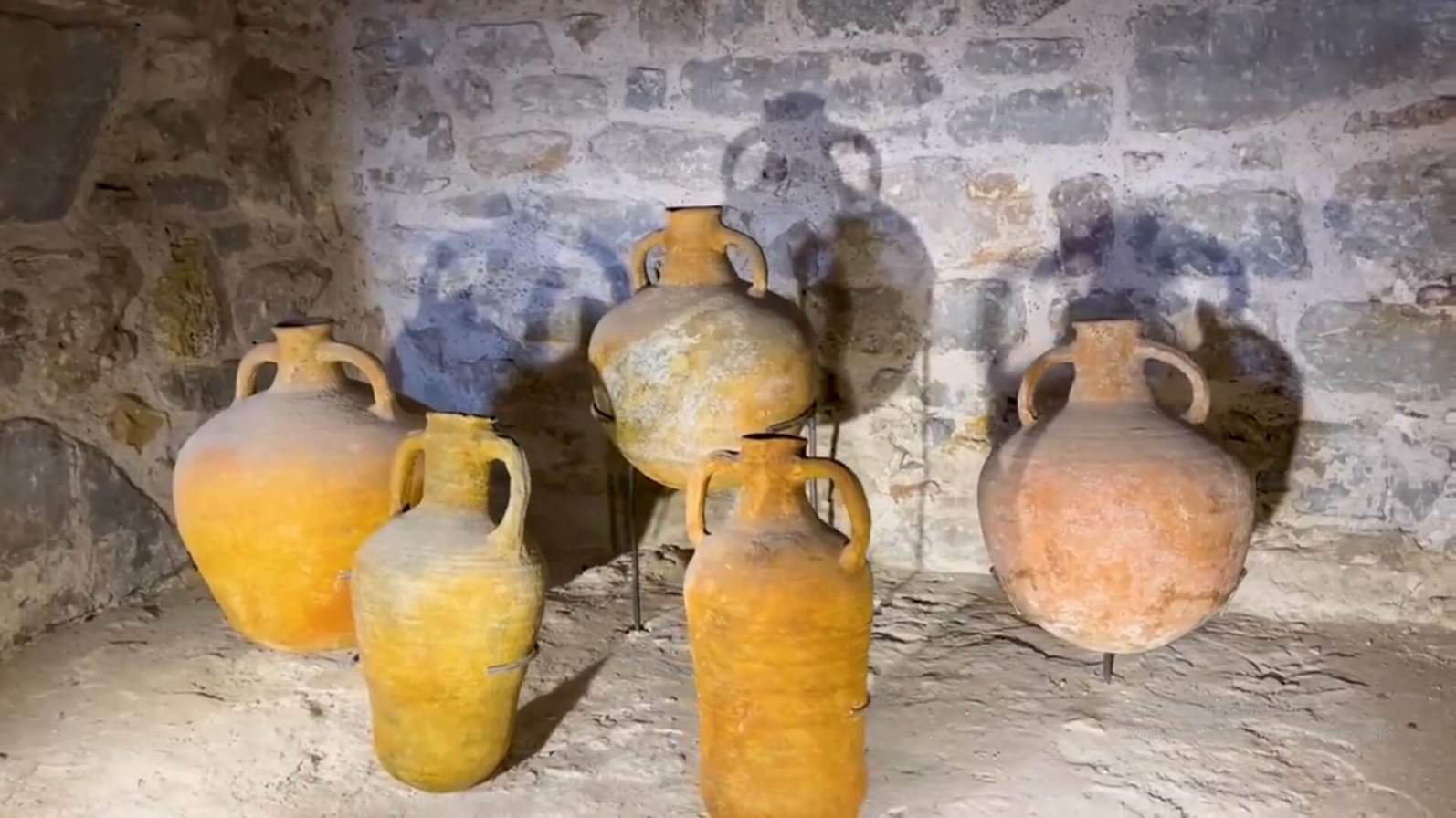
A 7,000-year past, the cradle of civilizations, and the birthplace of the blue voyage.
Estimated reading time: 3-4 minutes
The history of Bodrum dates back approximately 7,000 years. The oldest known settlement area of the peninsula is the Peynir Çiçeği Cave located in the Gündoğan neighborhood. Archaeological finds from the Chalcolithic and Bronze Ages discovered in this area have proven that Bodrum has seen continuous settlement throughout history.
In Antiquity, Bodrum was known as Halicarnassus. The Leleges, Carians, and Dorians lived on these lands; the city became one of the most important centers of the Carian Region. According to Herodotus, known as the Father of History, Halicarnassus was founded by the Dorians. Falling under Persian rule in the 6th century BC, the city reached its peak during the time of King Mausolus. With Halicarnassus declared the capital, the city developed rapidly, and the Mausoleum built in memory of Mausolus went down in history as one of the seven wonders of the world. Conquered by Alexander the Great in 334 BC, Halicarnassus slowly began to lose its former power after this date.
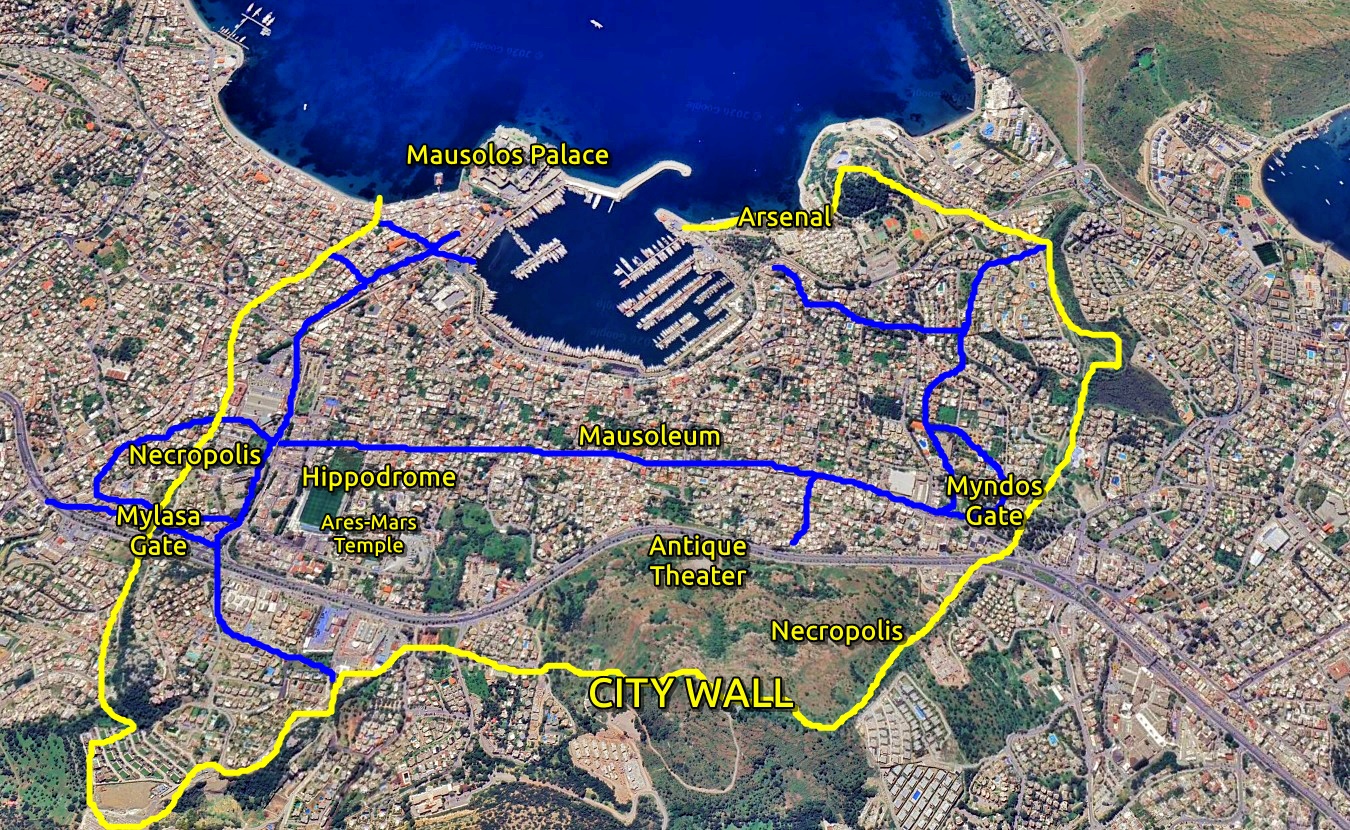
- Following the death of Alexander in 323 BC, the city and the region gained a free and democratic administration through the policies of his powerful general Antigonus.
- After the Battle of Ipsus in 301 BC, the city's independence was recognized by a treaty signed among the generals. During the 3rd century BC, it became an ally of the Ptolemaic Kingdom of Egypt.
- In accordance with the "Treaty of Apamea" signed in 188 BC, Halicarnassus regained its freedom.
- Attached to the Roman province of Asia in 129 BC, the city turned into a small settlement, far from its former glorious days.
- In 80 BC, it was targeted and looted by the pirate Verres.
The region remained impoverished due to heavy taxes and piracy until the reign of Emperor Augustus. During the Augustan period, it regained some importance and experienced its last bright era. However, despite all recovery efforts during the Roman Period (1st and 2nd centuries AD), the city could never return to its former magnificent days.
- In 26 AD, the Halicarnassus delegation traveling to Rome requested that the temple to be built in the name of Emperor Tiberius be constructed in their own city, claiming that there had been no earthquakes in the city for 1200 years. Unfortunately, these efforts aimed at reviving the city were fruitless.
- When the Roman Empire split in 395 AD, Halicarnassus remained under the rule of the Eastern Roman (Byzantine) Empire. With the rise of Christianity, the city turned into an episcopal center affiliated with the Archbishopric of Aphrodisias.
- Turned into ruins as a result of severe earthquakes in the 12th, 13th, and 14th centuries AD, Halicarnassus almost fell into silence during the subsequent two centuries of the Byzantine period and lost the population that would carry the city into the future.
Continuing its existence as a small settlement during the Roman and Byzantine periods, Bodrum remained within the borders of the Menteşe Principality for a short time starting from the 13th century AD. It became an important strategic base with the castle built by the Knights of St. John between 1403-1522. Bodrum Castle, built in this period, is still one of the most important symbols of the city today. Bodrum joined the lands of the Ottoman Empire in 1523 during the reign of Suleiman the Magnificent.
According to the Ottoman tax register dated 1530, the personnel in Bodrum Castle included 1 castle commander (Dizdar), 1 deputy commander (Kethüda), 4 gunners, 1 carpenter, 1 stonemason, 1 cellar keeper, and a number of soldiers. During this period, the famous sailor Turgut Reis, who was born in the town now bearing his name and who, along with Oruç and Hızır Reis, consolidated Turkish dominance in the Mediterranean with victories, is one of the most important figures raised in the region. Another great sailor of the era, Piri Reis, noted on his maps that there was a small castle in Bodrum with a wide harbor in front of it.
- Evliya Çelebi, who visited Bodrum in 1671, noted in his famous Book of Travels that the surroundings of the castle were not yet fully open to settlement and that a maximum of 100 people lived there, including those in the castle. However, he noted that the harbor had the capacity to accommodate 200 ships.
- The fate of Bodrum, which looked almost like a ruin until the 1720s, changed with the arrival of Captain Mustafa Pasha from Eğriboz (Kızılhisar) to the region. With Mustafa Pasha having a mosque bearing his name built near the castle, social life in Bodrum was revitalized.
- In 1770, Bodrum was bombarded by the Russian navy. Following this attack, settlement and population mobility around the castle began to increase again.
- Ottoman archive records from 1775 show that after the Russian navy burned Ottoman ships in Çeşme, a shipyard was established in Bodrum for the construction of new warships. In this shipyard, various galleons ranging in length from 38 to 47 meters were built between 1784 and 1831.
- It is known that at the end of the 19th century, there were 200 boats in Bodrum, 100 of which made a living from sponge diving and 100 from fishing and octopus hunting. During this period, the city was governed as a district affiliated with the Menteşe (Muğla) Sanjak of the Aydın Province.
- The historic Bodrum Castle began to be used as a prison starting from 1895.
During the years of the First World War, in 1915, the French warship named "Duplex" fired upon Bodrum and attempted to land; however, thanks to the strong resistance of the local people, it was forced to retreat without completing the occupation. During the National Struggle period, the city was under Italian occupation for approximately 2 years and 2 months from May 11, 1919, to July 5, 1921, after which it completely passed under Turkish rule.
In the early years of the Republic, Bodrum was a quiet coastal town with white houses, sponge divers, and fishermen, able to connect with the outside world only by sea due to the lack of road transportation. In this period, the city served as a small port center where commercial products such as tobacco, figs, grapes, and almonds, brought from surrounding villages by camels and mules, were loaded onto ships.
Arriving in Bodrum as an exile in 1925, "The Fisherman of Halicarnassus" Cevat Şakir Kabaağaçlı played a decisive role in shaping the cultural and literary identity of the city. Thanks to the works he penned with his passion for nature, the sea, and the Aegean people, Bodrum quickly became a focal point for artists and intellectuals. The concept of the "Blue Voyage," which is a global brand today, was also born in this unique geography. Entering a rapid transformation process with the development of tourism starting from the 1960s, Bodrum has successfully blended its traditional historical texture with modern life to gain its current popularity.
From Bodrum Castle to the Antique Theater, the most important historical and touristic places of Bodrum. All the popular spots you must see in Bodrum in 2026.
View Places Bodrum Otogar